Platform
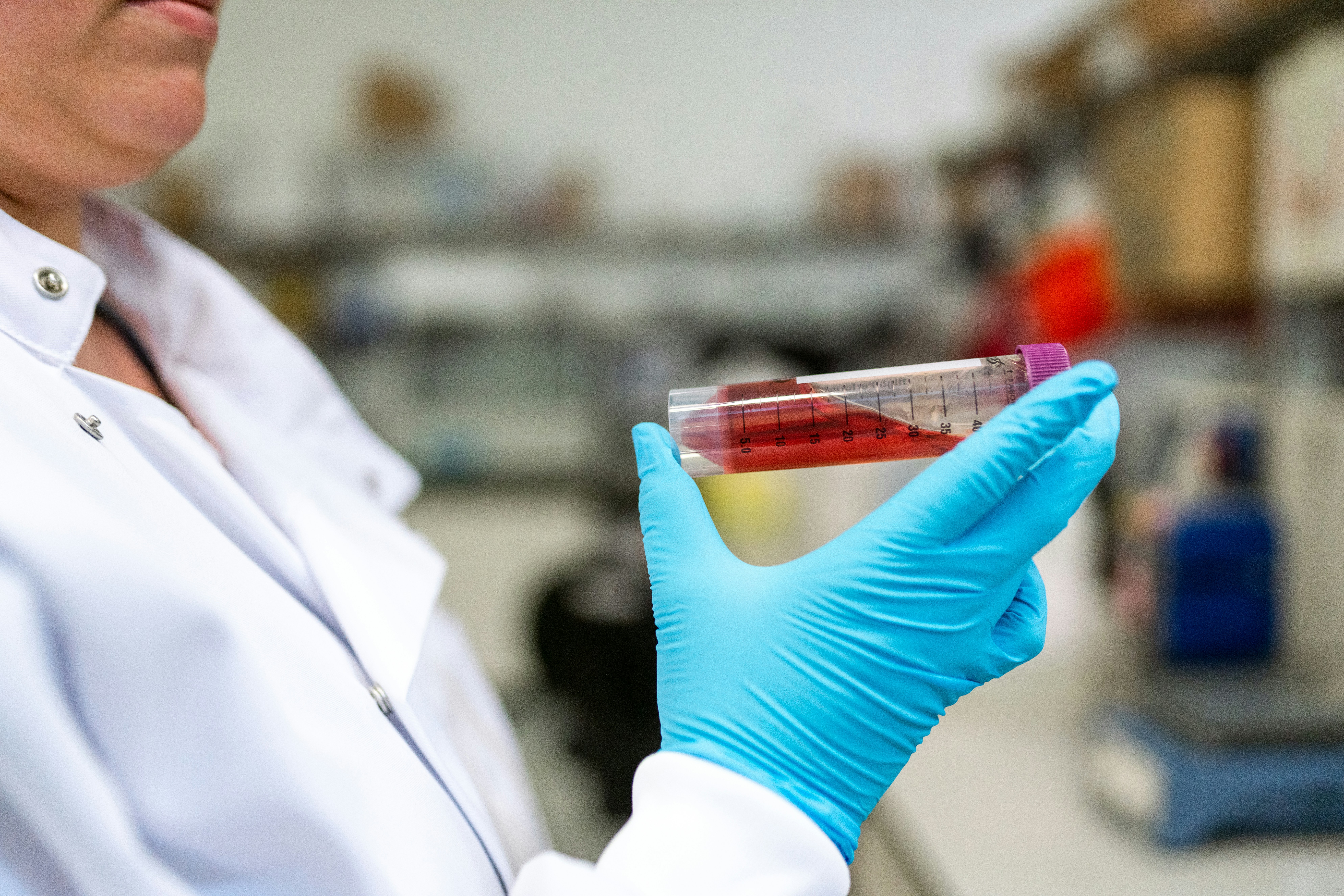
A platform for safe, scalable, and
controlled non-viral gene delivery
CellShot integrates proprietary electroporation technology, system engineering, and process-ready design to enable damage-minimized, scalable gene transfer—from research to GMP manufacturing.
CellShot Badger Platform (US FDA DMF #30803)
A Versatile Platform for Small- to Medium-Scale Cell Processing
An integrated system of device, consumables, and workflows designed for regulatory-ready and scalable cell therapy manufacturing.
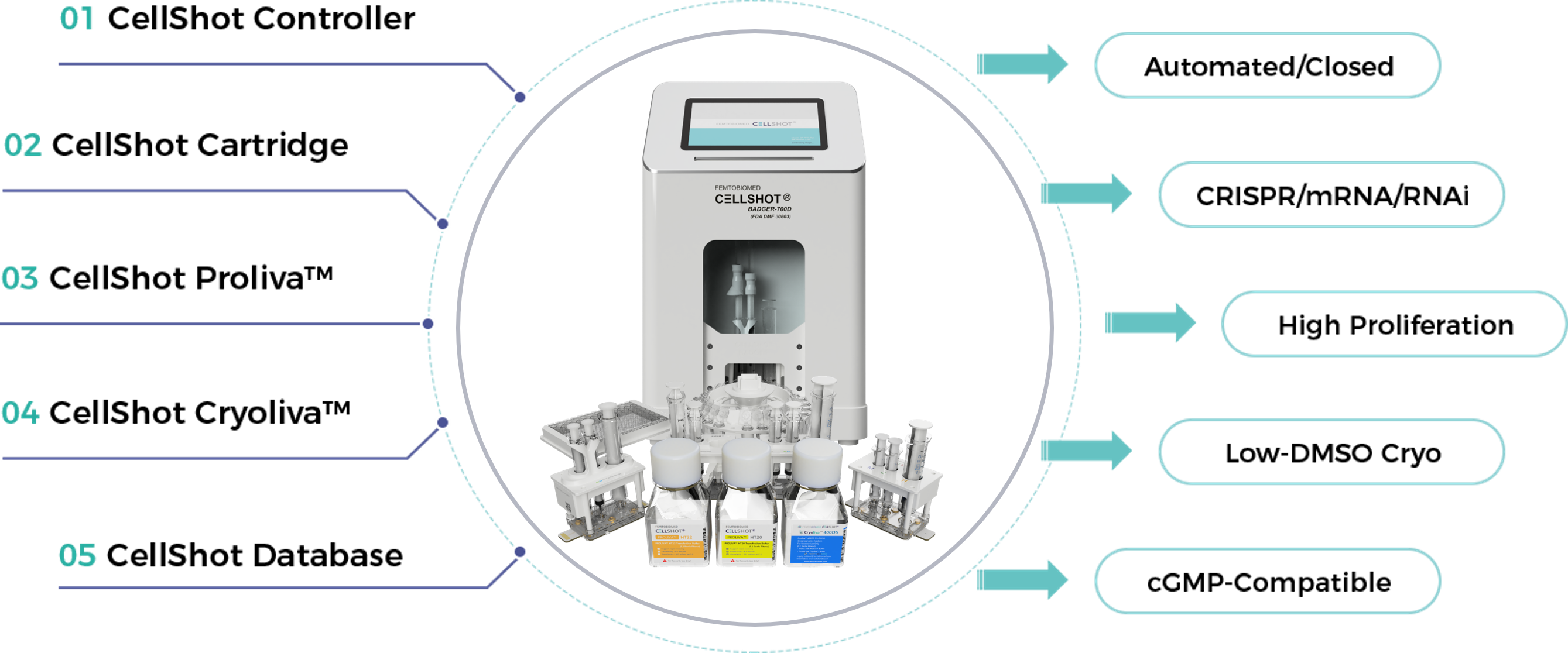
CellShot Badger Suite with Five Core Modules
A complete, modular solution for conditionally closed and automated gene delivery
The CellShot Badger Platform is engineered to protect cells during the most vulnerable stages of gene delivery through a conditionally closed, automated workflow.
By integrating automated control, single-use cartridges, protective buffer systems, cryopreservation solutions, and a digital database, the platform delivers safe, reproducible, and cGMP-ready performance where it matters most across CRISPR, mRNA, and RNAi applications.
This modular design supports seamless translation from research to early-stage manufacturing while maintaining flexibility within standard GMP environments.
From Platform to Process
The CellShot Badger Suite is designed to support a practical, conditionally closed workflow aligned with real-world cGMP manufacturing environments, where critical steps are protected while flexibility is preserved.
Below is a representative five-step cell processing workflow, illustrating how CellShot protects cells from loading through gene delivery and early recovery—before transitioning seamlessly into standard downstream manufacturing processes.
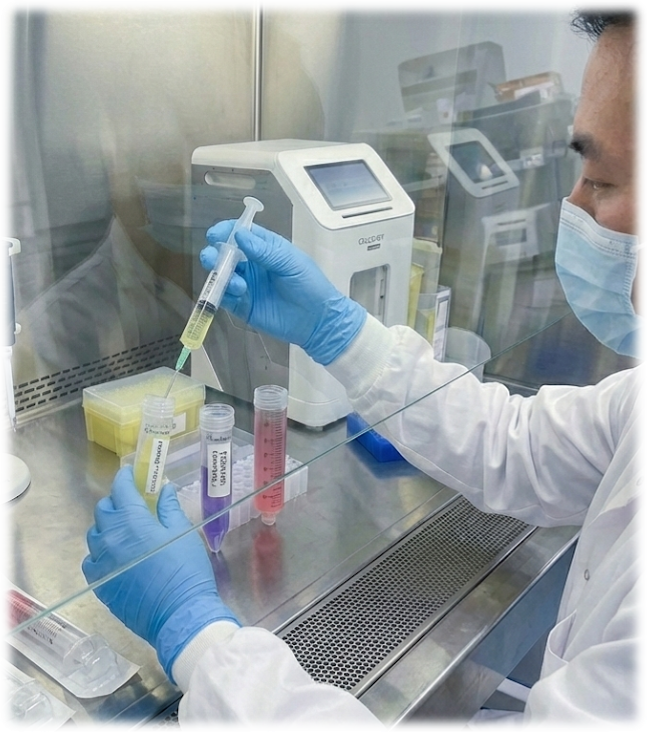
1. Cartridge Preparation
Single-use cartridge setup under BSC
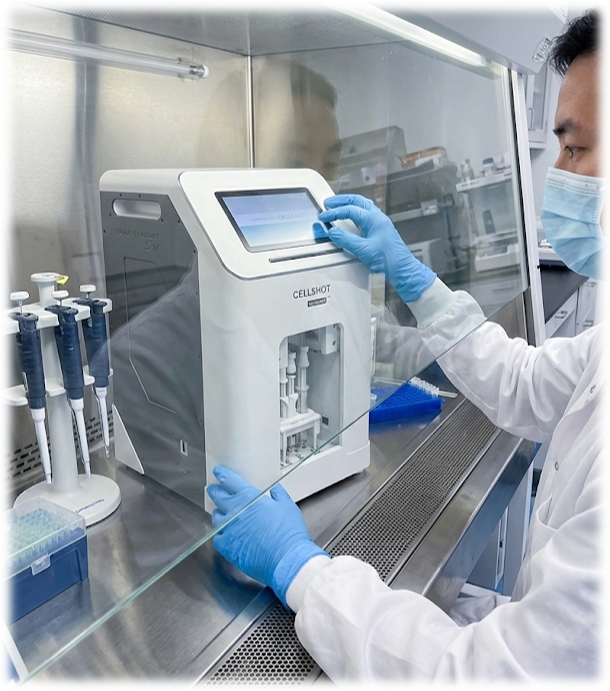
2. Electroporation with Resting
Temperature-controlled gene delivery with early recovery resting
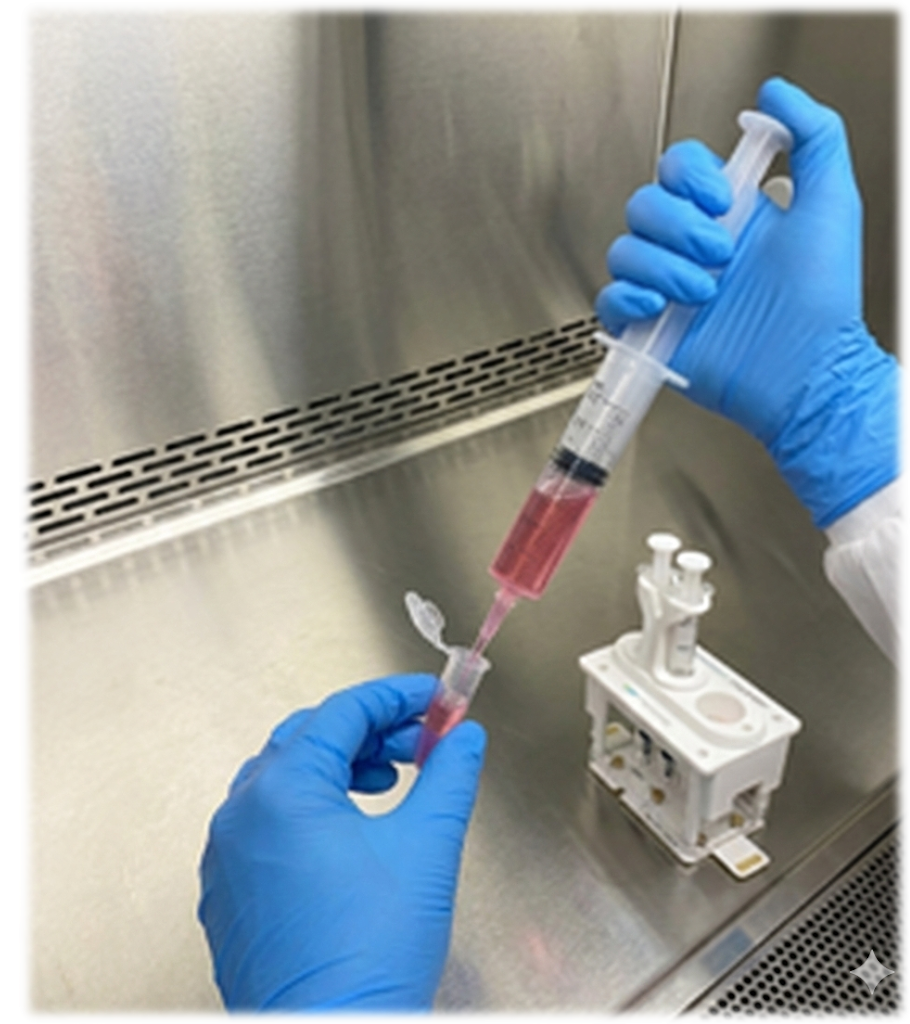
3. In-Process Sampling
Optional sampling under controlled conditions
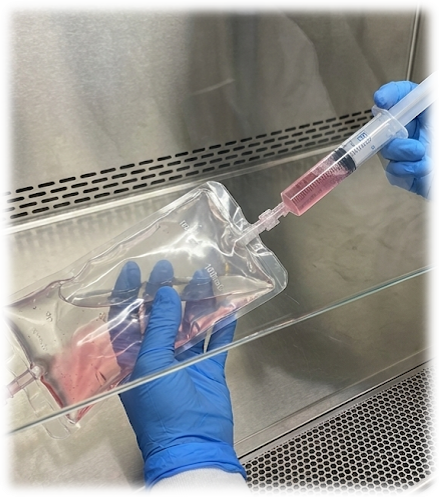
4. Cell Seeding
Transfer to culture vessels with Proliva™-supported recovery conditions
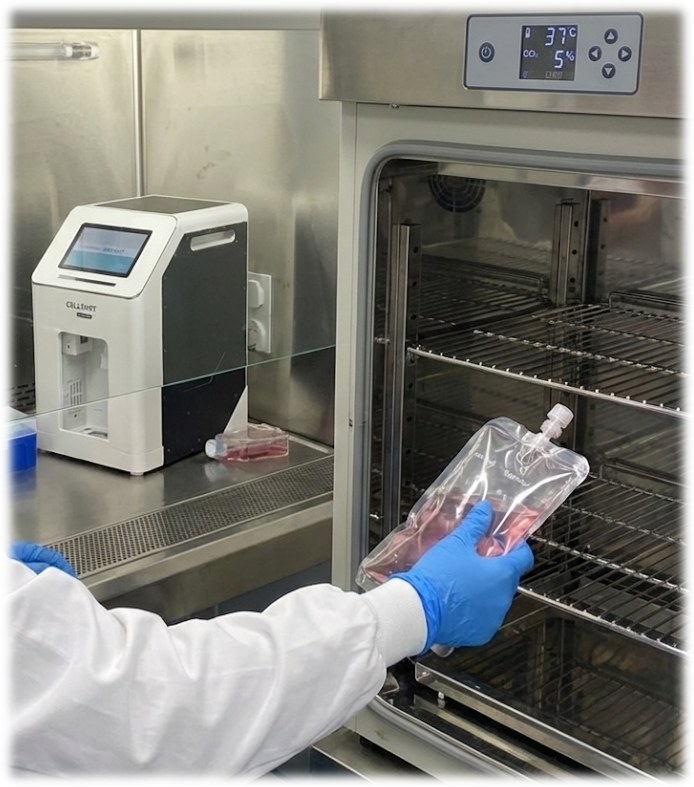
5. Recovery Incubation (24 h)
Early recovery and stabilization in standard GMP incubators
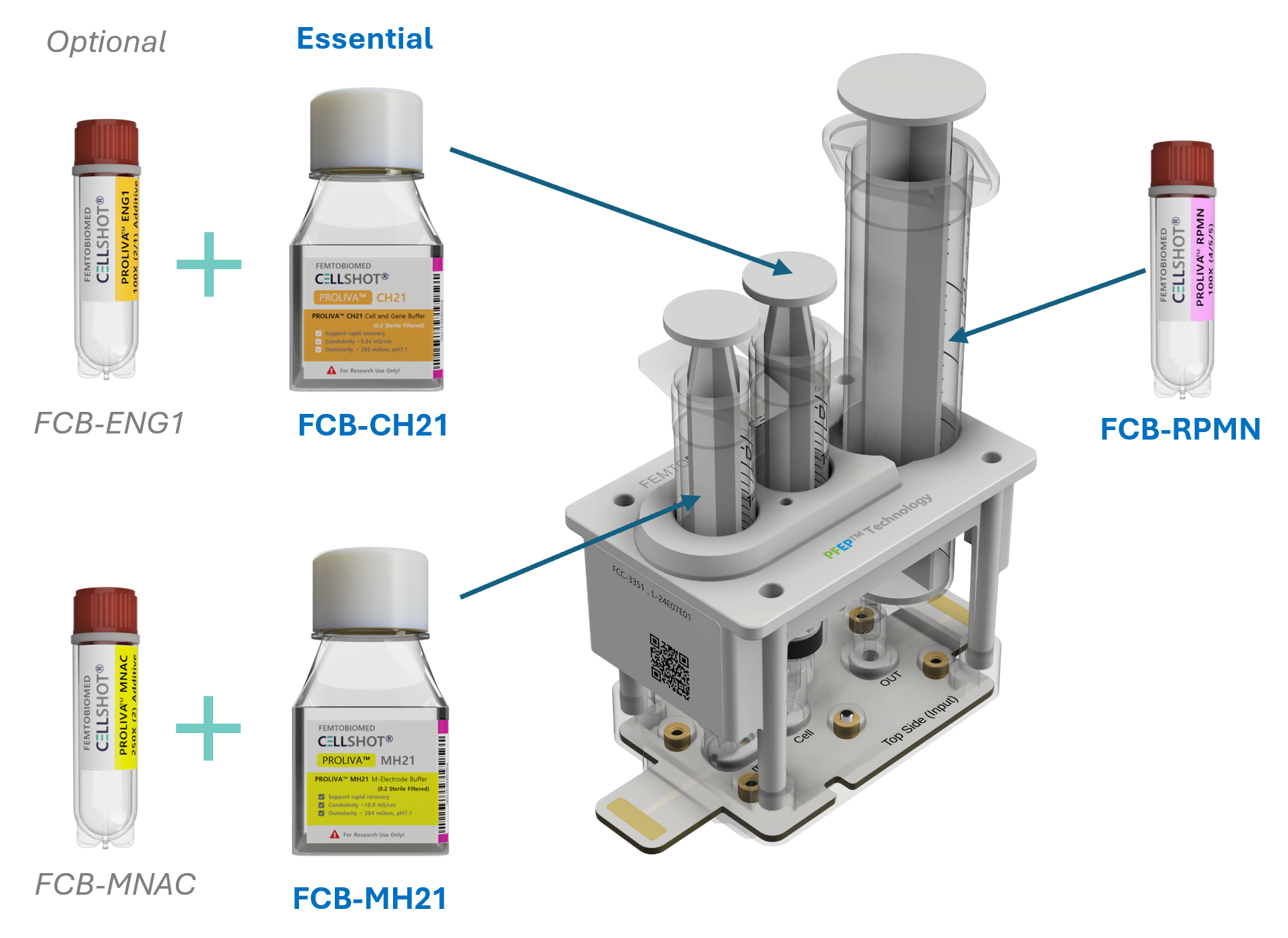
Essential Execution Buffers (C- & M-Channel)
• PROLIVA™ CH21 (FCB-CH21)
Core C-channel electroporation buffer for cell and gene resuspension. Protects cellular membranes and organelles during electroporation while mitigating ROS and supporting mitochondrial recovery.
→ Optional additive: FCB-ENG1 may be added when enhanced viability defense is required for sensitive cell types.
• PROLIVA™ MH21 (FCB-MH21)
Essential M-channel electrochemical protection buffer. Functions as an electrical busbar and electrochemical defense chamber, stabilizing field-induced reactions—especially critical in large-scale or high-intensity electroporation.
→ Optional additive: FCB-MNAC can be incorporated to further neutralize metal ions and suppress electrochemical stress.
Immediate Post-Electroporation Recovery (Harvest Syringe)
• PROLIVA™ RPMN (FCB-RPMN)
A critical recovery medium additive applied immediately after flow electroporation. RPMN is added to the harvest medium (typically at 1% v/v) to enable rapid biochemical stabilization and early recovery. Cells may rest 20–30 minutes at RT or 37 °C before transfer—minimizing stress accumulation during transition.
Extended Recovery & Optional Modulation (24 h Incubation)
After the initial recovery phase, cells are transferred to standard culture vessels for 24 h incubation.
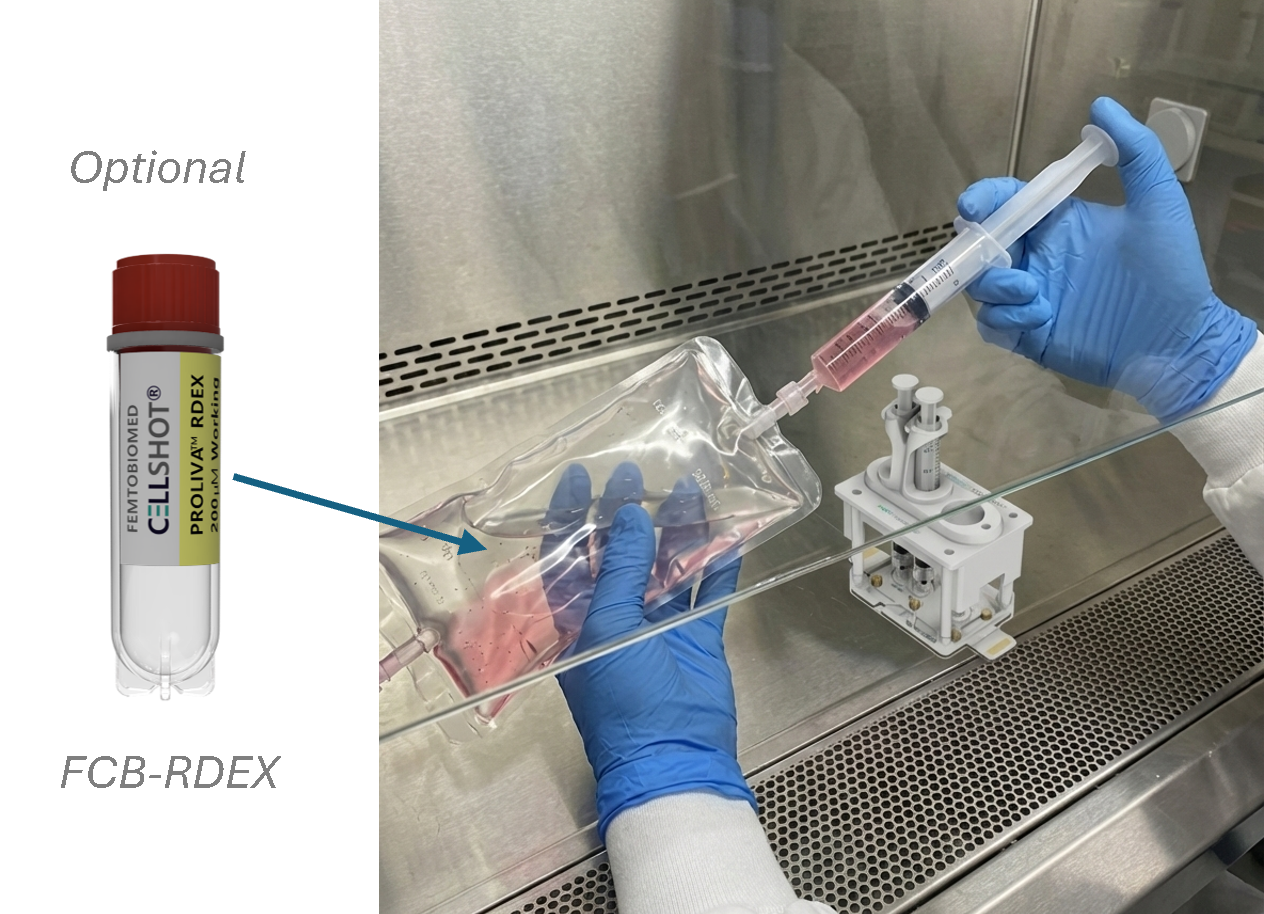
• Optional: PROLIVA™ RDEX (FCB-RDEX)
Can be added to the recovery medium to further suppress abnormal stress signaling pathways (e.g., NF-κB, AP-1) when prolonged inflammatory or oxidative stress is a concern.
Why This Architecture Matters
This staged Proliva™ buffer architecture transforms electroporation from a single high-stress event into a controlled, non-destructive manufacturing process, enabling:
- High post-electroporation viability
- Preserved proliferation capacity
- Repeatable and scalable workflows
- Seamless transition from research to GMP manufacturing
Why Conditionally Closed?
A Practical Approach to Real-World cGMP Cell Therapy Manufacturing
In cell and gene therapy manufacturing, not all process steps carry the same risk.
The most critical vulnerability occurs during gene delivery and early recovery, where cells are exposed to physical stress, contamination risk, and variability.
The CellShot Badger Platform adopts a conditionally closed and automated processing strategy—fully enclosing and automating the process steps associated with the highest risk to cell quality and patient safety, while maintaining operational flexibility for downstream processes within standard GMP environments.
The Reality of cGMP Manufacturing
While fully closed systems are ideal in theory, most real-world cGMP facilities operate with a hybrid model, combining:
- Cleanrooms of varying grades
- Biosafety cabinets (BSCs) for aseptic manipulation
- Single-use, closed consumables where risk is highest
Designing every step as fully closed often leads to:
- Increased system complexity
- Reduced process flexibility
- Higher cost and slower technology adoption
CellShot is engineered to align with how cGMP facilities actually operate today, rather than imposing idealized infrastructure assumptions.
| Term | Definition | Typical Use |
|---|---|---|
| Closed | A fully sealed system with no open handling throughout the entire process | Large-scale industrial bioreactors |
| Functionally Closed | Mostly closed with controlled, aseptic interventions | Hybrid GMP workflows |
| Conditionally Closed | Closed and automated during critical risk steps only, with all open manipulations performed under controlled aseptic conditions (e.g., BSC). | CellShot Badger Platform |
Platform Roadmap for Scalable Cell Therapy Manufacturing
A Practical Approach to Real-World cGMP Cell Therapy Manufacturing
Two Platforms. One Unified CellShot Strategy.
The CellShot Platform roadmap is built on a stepwise, risk-aligned evolution—from a practical, conditionally closed system optimized for today's cGMP environments to a fully closed and automated platform designed for future large-scale manufacturing.
| Feature | CellShot Badger | CellShot Menorah™ |
|---|---|---|
| Closure Concept | Conditionally Closed | Fully Closed |
| Automation Level | Partial (Critical Steps) | Full (End-to-End) |
| BSC Requirement | Yes | No |
| Flexibility | High | Moderate |
| Deployment Speed | Immediate | Planned |
| Scale Focus | Small–Medium | Medium–Large |
| Regulatory Readiness | DMF Registered | Commercial cGMP Target |
A Deliberate, Regulatory-Aligned Evolution
CellShot's platform strategy is not a replacement—but an expansion.
- Badger™ addresses today's needs: speed, flexibility, and compatibility
- Menorah™ prepares for tomorrow's demands: scale, standardization, and automation
Both platforms share:
- • PFEP™ gene delivery technology
- • Proliva™ cell-protective buffer system
- • Cryoliva™ low-DMSO cryopreservation strategy
- • Unified digital and data architecture
This ensures process continuity, regulatory consistency, and seamless scaling.
Regulatory Alignment & Inspection Readiness
Designed not only to perform—but to be reviewed, audited, and approved.
Regulatory-by-Design Platform
The CellShot Badger Platform is developed with regulatory submission and inspection workflows in mind—supporting a seamless transition from early development to clinical and early commercial manufacturing.
Rather than enforcing full system closure across all process steps, CellShot applies risk-based closure, documentation, and control strategies aligned with FDA and EMA expectations for advanced therapy medicinal products (ATMPs).
This approach ensures robust control where it matters most, while preserving flexibility within real-world GMP environments.
Key Regulatory Alignment Points
- •Risk-Based Process Design
Critical quality-impacting steps—including gene delivery and early recovery—are enclosed and automated in accordance with ICH Q8/Q9 risk management principles.
- •Defined System Boundaries
Clear delineation between closed, conditionally closed, and open-but-controlled operations enables transparent and regulator-friendly process descriptions in CMC documentation.
- •Traceability & Data Integrity
Cartridge identification, protocol execution, and key process parameters are managed through the CellShot Database, supporting ALCOA+ data integrity principles.
- •DMF-Registered Core System
The CellShot Badger controller and consumable architecture are registered in a US FDA Drug Master File, enabling direct cross-referencing in IND and IMPD submissions.
- •Inspection-Ready Operation Model
The platform is designed to operate within standard GMP cleanroom and biosafety cabinet (BSC) environments that are already familiar to regulatory inspectors.
A Platform Designed for Real-World Manufacturing—and What Comes Next
The CellShot Badger Platform represents a deliberate, regulatory-aligned approach to modern cell therapy manufacturing.
By focusing closure and automation where risk truly matters, CellShot enables:
- Faster adoption within existing GMP facilities
- Clear regulatory positioning across development stages
- Seamless expansion toward larger-scale, fully closed systems
This foundation enables the CellShot Platform to scale not by redesigning processes, but by extending the same core technologies, buffers, and data architecture across applications and manufacturing scales.