Platform
A platform for safe, scalable, and
controlled non-viral gene delivery
CellShot integrates proprietary electroporation technology, system engineering, and process-ready design to enable damage-minimized, scalable gene transfer—from research to GMP manufacturing.
CellShot® Suite
An Integrated-Modular-System, cGMP-Ready End-to-End Platform for Non-Viral Cell Engineering
CellShot® Suite integrates hardware, consumables, protective buffers, and digital workflows into a single non-viral cell engineering platform — enabling safe, reproducible, and cGMP-ready manufacturing from CRISPR to cell therapy.
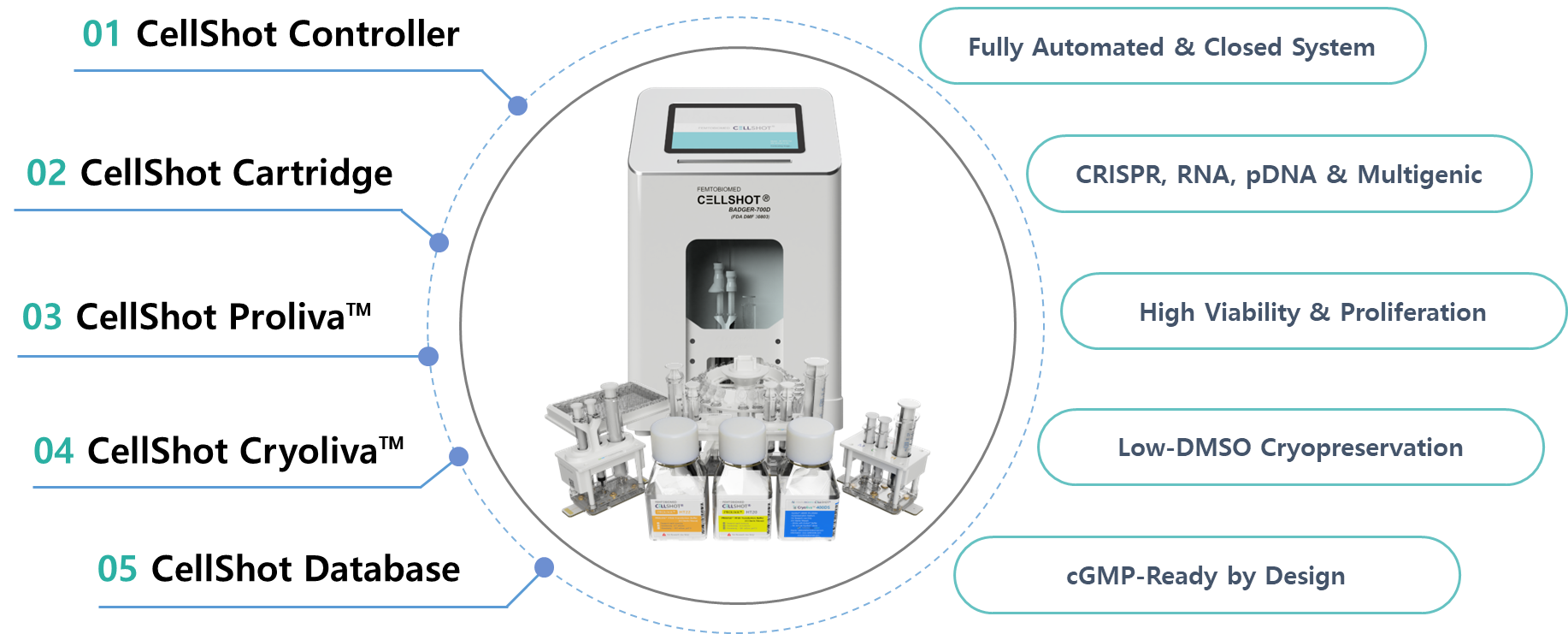
CellShot® Suite is an integrated non-viral cell engineering platform that combines automation, safety, and data intelligence into a single modular system.
Built around five core modules — Controller, Cartridge, Proliva™, Cryoliva™, and Database — it enables consistent, scalable, and regulator-ready cell engineering workflows.
Registered under a US FDA Drug Master File (DMF #30803), CellShot® Suite supports clinical and manufacturing use across CRISPR, mRNA, and RNAi applications.
Every process is automated, monitored, and digitally recorded, enabling advanced QC, full traceability, and error-minimized cGMP manufacturing for next-generation cell and gene therapies.
The CellShot® ND-FFT design philosophy is realized through five core modules.
| ND-FFT Core Element | CellShot Module | How It Is Implemented (Design Level) | Resulting Value |
|---|---|---|---|
Electrical Control Focused & Uniform Field | CellShot Controller |
|
|
Thermal Control Active thermodynamic defense | CellShot Controller CellShot Cartridge |
|
|
Buffer Control Electrochemical & biochemical optimization architecture | CellShot Proliva™ CellShot Cryoliva™ |
|
|
Flow Control Scalable & high-throughput | CellShot Cartridge Pumping System |
|
|
System Integration Digital orchestration | CellShot Database |
|
|
01CellShot Controller
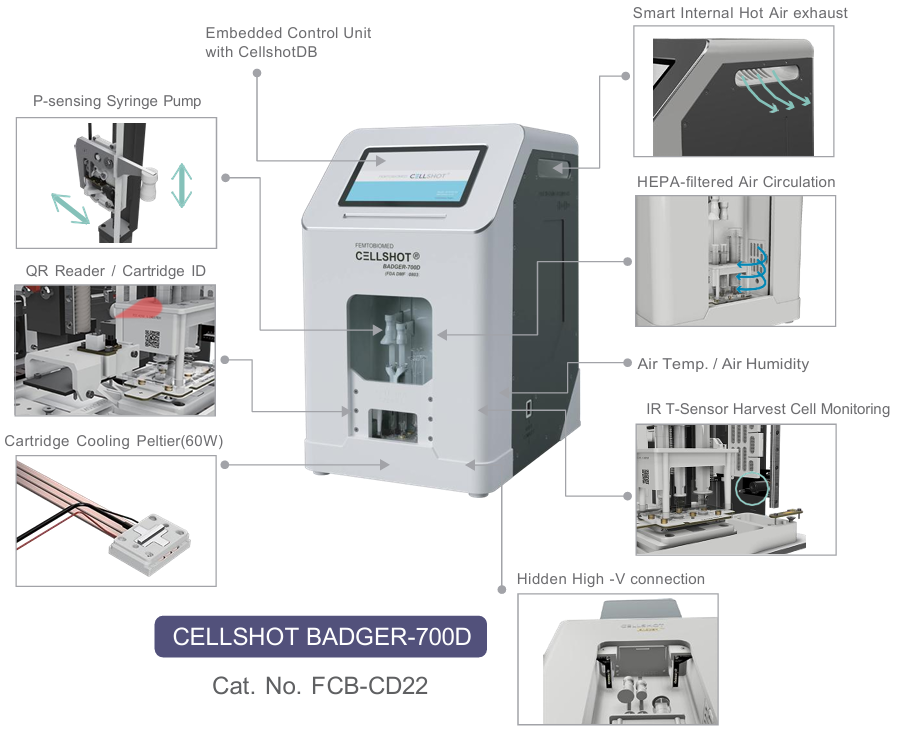
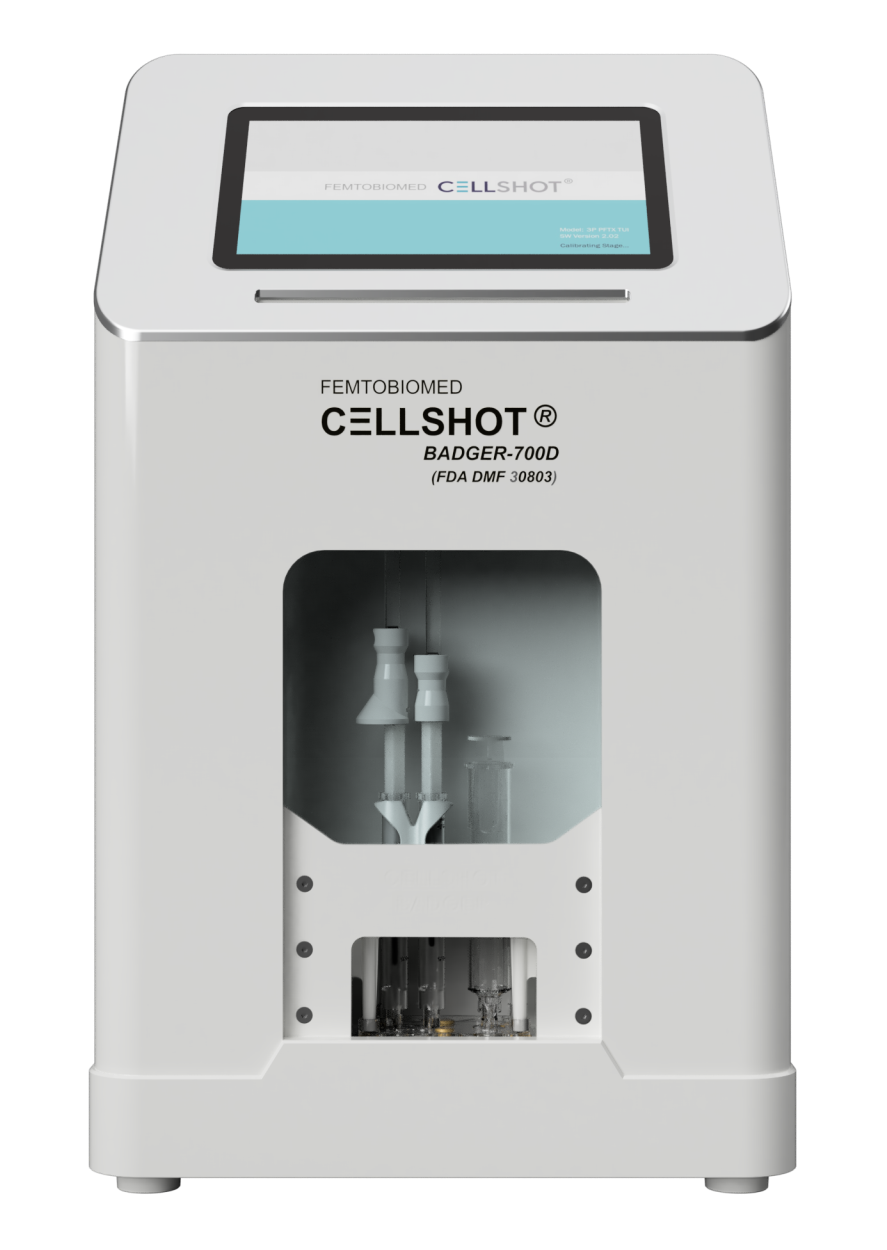
The CellShot Controller - currently represented by the FDA DMF-registered CellShot Badger - is the core engine of the platform. Following the work instructions stored in the CellShot Database, the Controller initializes the loaded cartridge, regulates cooling, applies high-voltage pulses, and performs precision pumping. This integration ensures damage-free, reproducible nonviral gene transfer with consistent quality across diverse cell types.
TMS
(Temperature Management System) ensures precise thermal control throughout electroporation. Cartridge cooling is managed by a feedback-controlled block, while an integrated IR sensor directly monitors the cell compartment. Thisdual-feedback design secures optimal thermal conditions even with mounting errors or malfunctions.
HVS
(High-Voltage Supply) is fully enclosed for safety. High-voltage connections activate only after the cartridge is securely mounted, physically isolating the user from risk. HEPA-filtered internal circulation maintains operational stability.
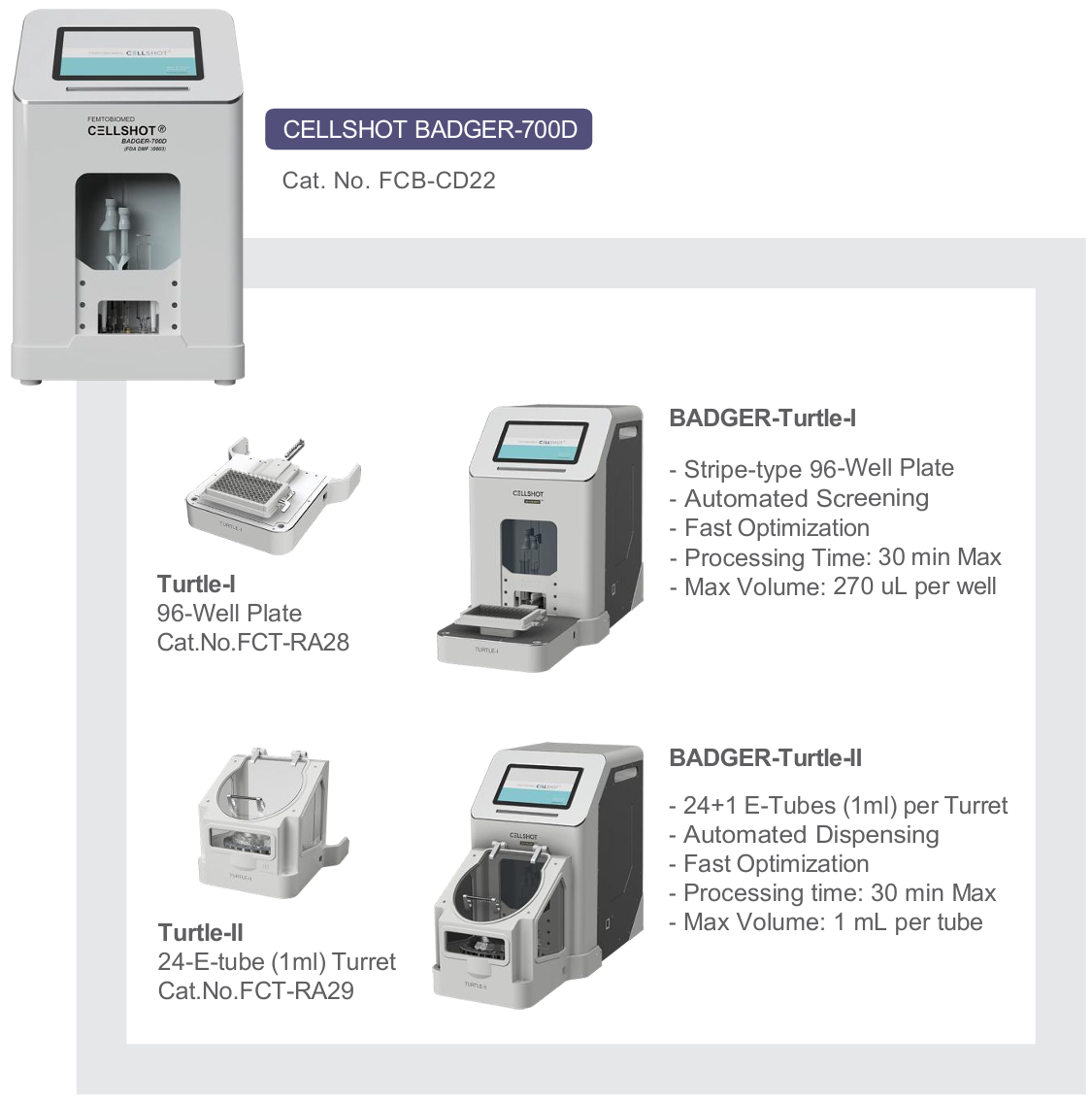
The Turtle Dispenser
is an optional accessory for the CellShot Badger Device, enabling high-throughput screening of electroporation conditions. Two versions are available: Turtle-I for 96-well plates and Turtle-II for standard E-tubes.
Conditions can be selected from validated screening libraries or custom-programmed via the CellShot Database, supporting flexible research needs. Ideal for R&D, streamlining electroporation optimization.
02CellShot Cartridge
The CellShot Cartridge provides the single-use consumable format that ensures sterility and GMP compliance. Two formats are available: standard syringe-based (3 mL, 5 mL, 10 mL) and high-capacity cell-bag type (2026 release), allowing scaling from research to commercial production.
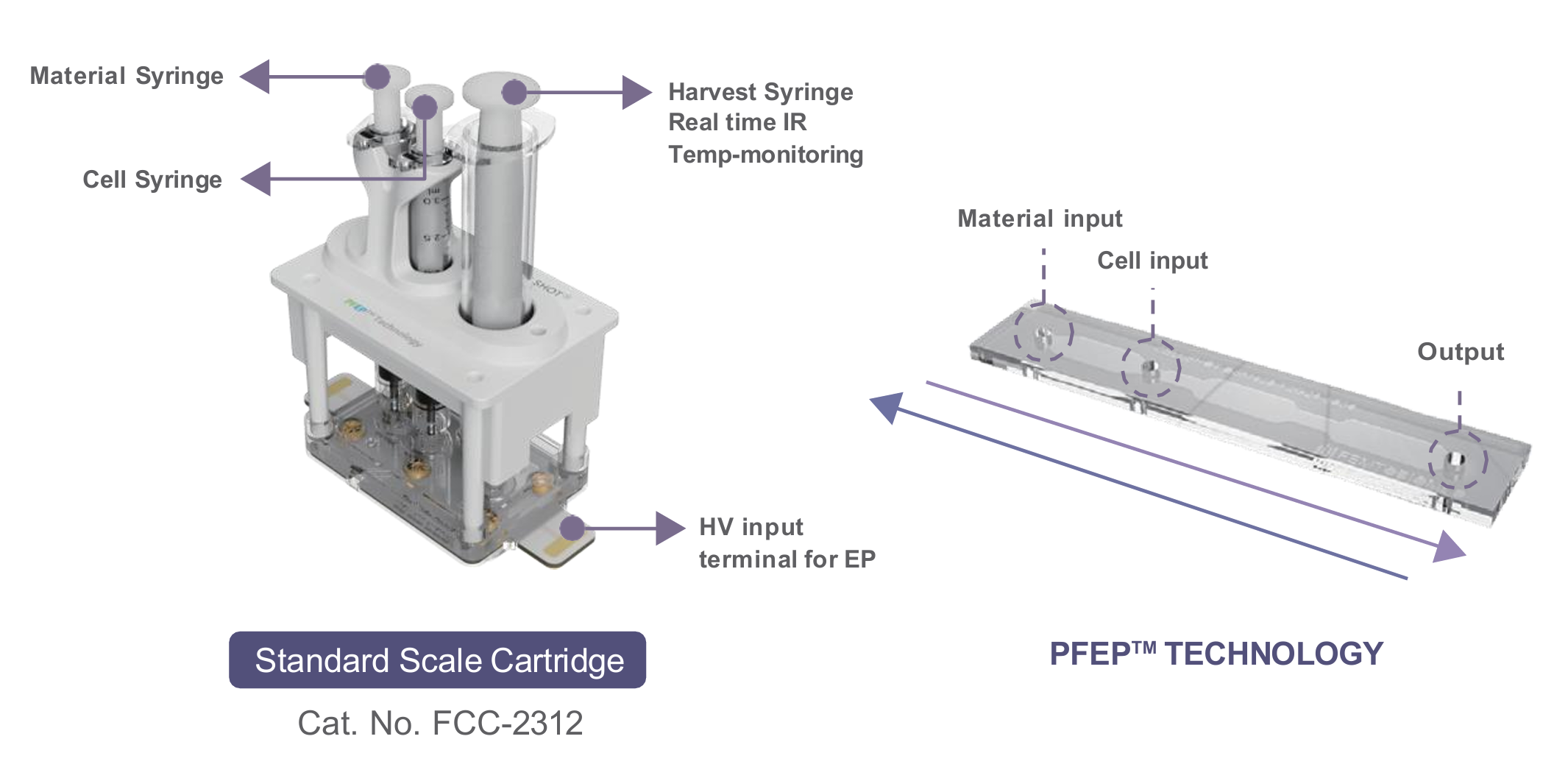
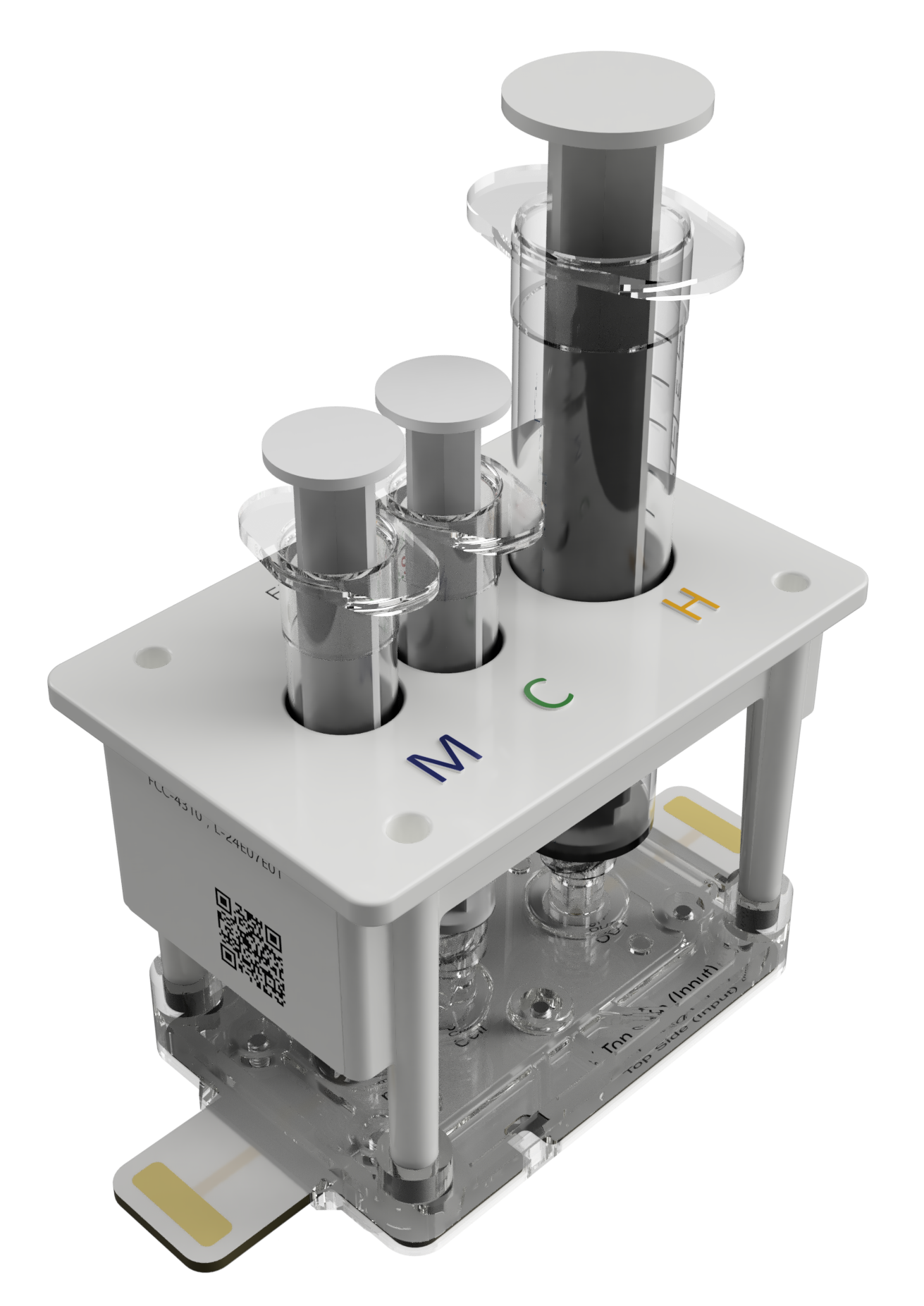
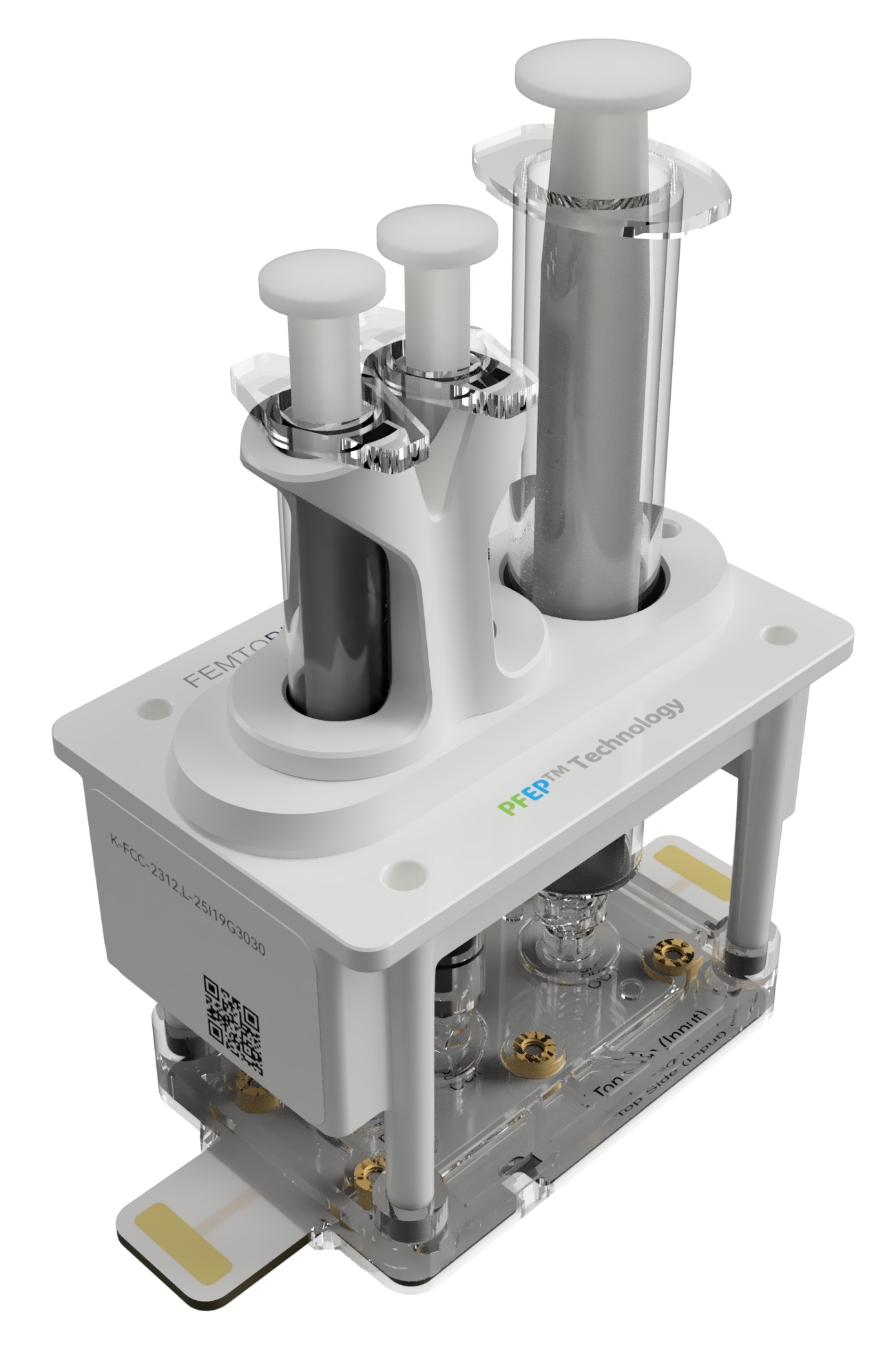
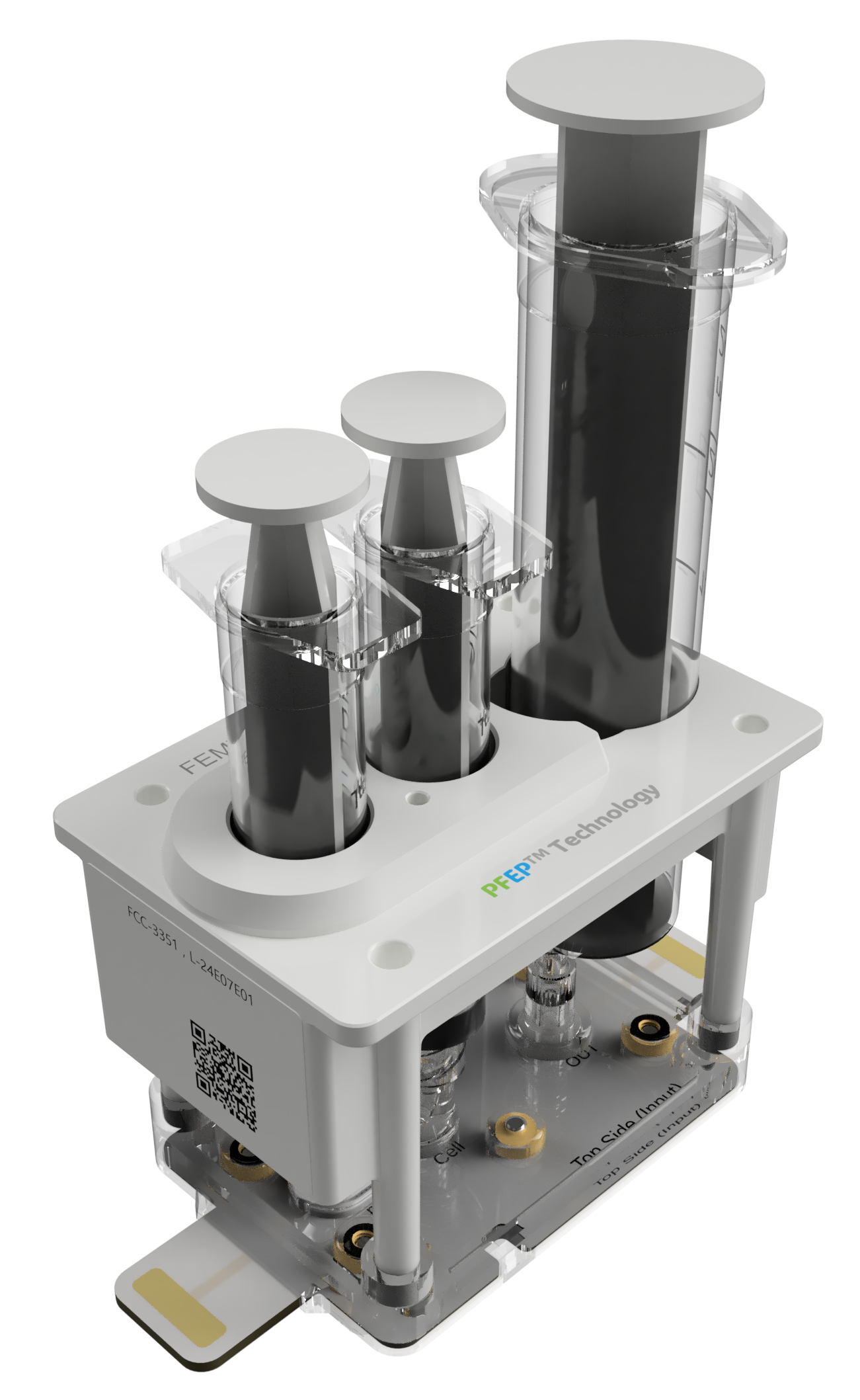
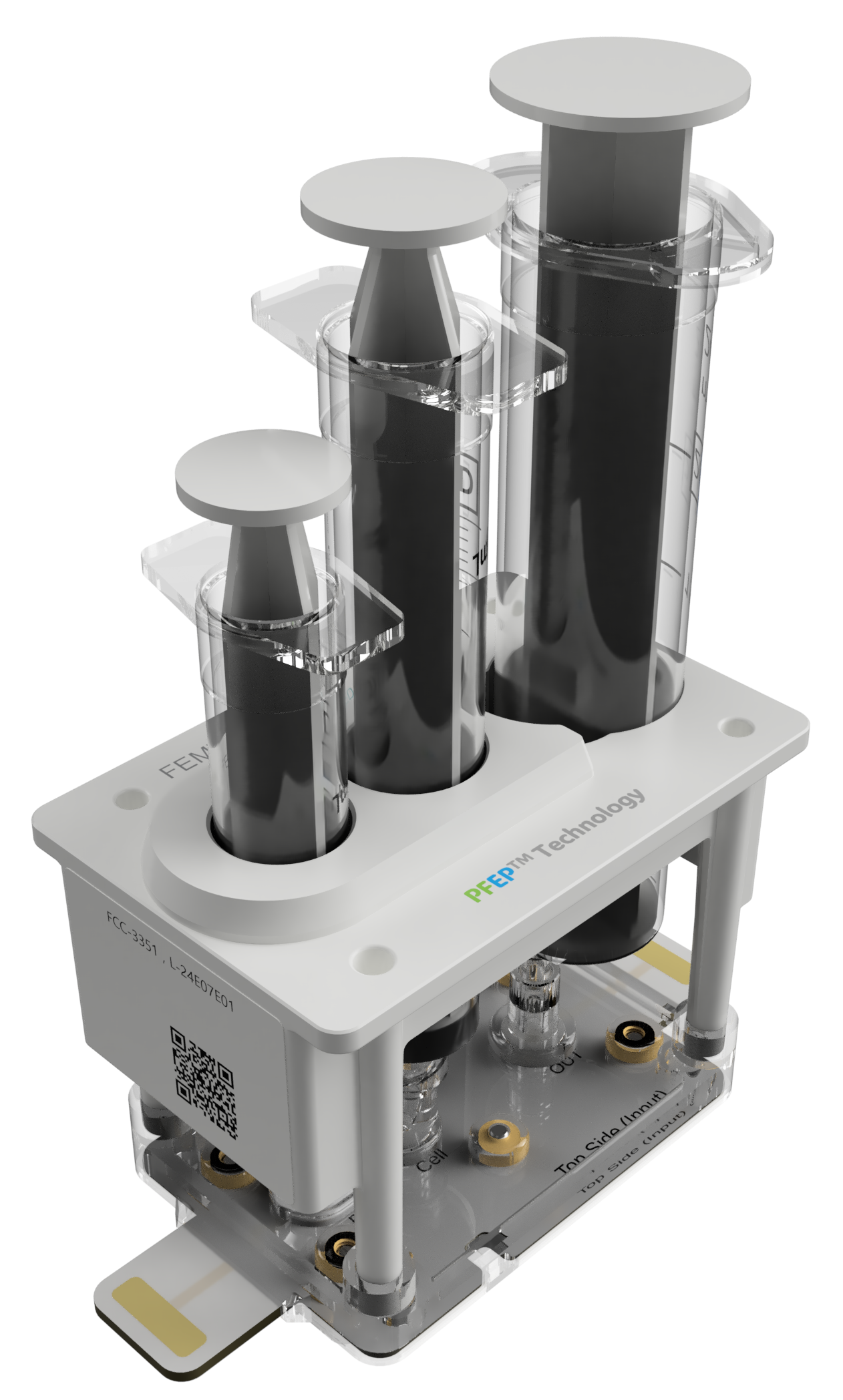
| CAT NO. | FCC-2310 | FCC-2312 | FCC-3351 | FCC-3391 |
|---|---|---|---|---|
| Cell Volume | 2ml | 3ml | 5ml | 10ml |
| Max Capa. | 2x10⁸ cells | 3x10⁸ cells | 5x10⁸ cells | 1x10⁹ cells |
| Mat Volume | 2ml | 3ml | 5ml | 5ml |
| Proc. Time | < 2min | < 3min | < 4min | < 8min |
| DMF | MF 30803 | MF 30803 | MF 30803 | MF 30803 |
03CellShot Proliva™
Proliva™ Buffer Architecture
"Proliva™ is the biochemical protection layer of the CellShot ND-FFT system—designed to preserve cell health not only during electroporation, but throughout recovery and expansion."
Biochemical protection engineered for non-destructive cell processing
- In non-viral gene delivery, cellular stress does not end at membrane permeabilization.
- Electrochemical reactions, oxidative stress, and mitochondrial dysfunction continue to affect cell health.
Proliva™ is not a single buffer—it is a modular biochemical protection architecture, engineered to preserve cell viability and functionality.
Design Philosophy – Buffer as Architecture
Beyond a Single Buffer: Proliva™ is designed as a system, not a formulation.
Conventional electroporation buffers focus on conductivity and osmolarity. Proliva™ takes a different approach to:
- Protect cellular membranes and organelles
- Suppress electrochemical and oxidative stress
- Support immediate post-EP recovery
- Maintain compatibility with GMP manufacturing
Each Proliva™ component is positioned at a specific stage of the ND-FFT process, forming a continuous defense layer.
| Specs | PROLIVA™ CH21 FCB-CH21 | PROLIVA™ MH21 FCB-MH21 | PROLIVA™ ENG1 FCB-ENG1 | PROLIVA™ MNAC FCB-MNAC | PROLIVA™ RPMN FCB-RPMN | PROLIVA™ RDEX FCB-RPMN |
|---|---|---|---|---|---|---|
| Role | Core EP C-Buffer (Cell & Gene Resuspension) | Electrochemical Protection M-Buffer | Optional C-Buffer Additive (Stress Recovery) | Optional M-Buffer Additive (Electrochemical Defense) | Recovery Medium Additive (Post-EP Biochemical Support) | Recovery Medium Additive (24h 2nd Recovery Support) |
| Primary Function |
|
|
|
|
|
|
| System Position | Essential execution buffer | Essential protection buffer | Recovery-enhancing supplement | Protection-enhancing supplement | Essential recovery supplement | Protection recovery supplement |
| Usage | Standard: CH21 Strong EP: CH22 Max EP: CH23 | Standard: MH21 Strong EP: MH22 Max EP: MH23 | Add 1% (v/v) to C-buffer | Add 0.4–1% (v/v) to M-buffer | Add 1% (v/v) to recovery medium | Add 0.025% (v/v) to culture medium |
| Compatibility | All cell types | All cell types | All cell types | All cell types | Recovery media (e.g., CTL medium) | All types of culture media |
| Storage | 2–8 °C | 2–8 °C | –80 °C (deep freeze) | –80 °C (deep freeze) | –80 °C (deep freeze) | –80 °C (deep freeze) |
| Product | 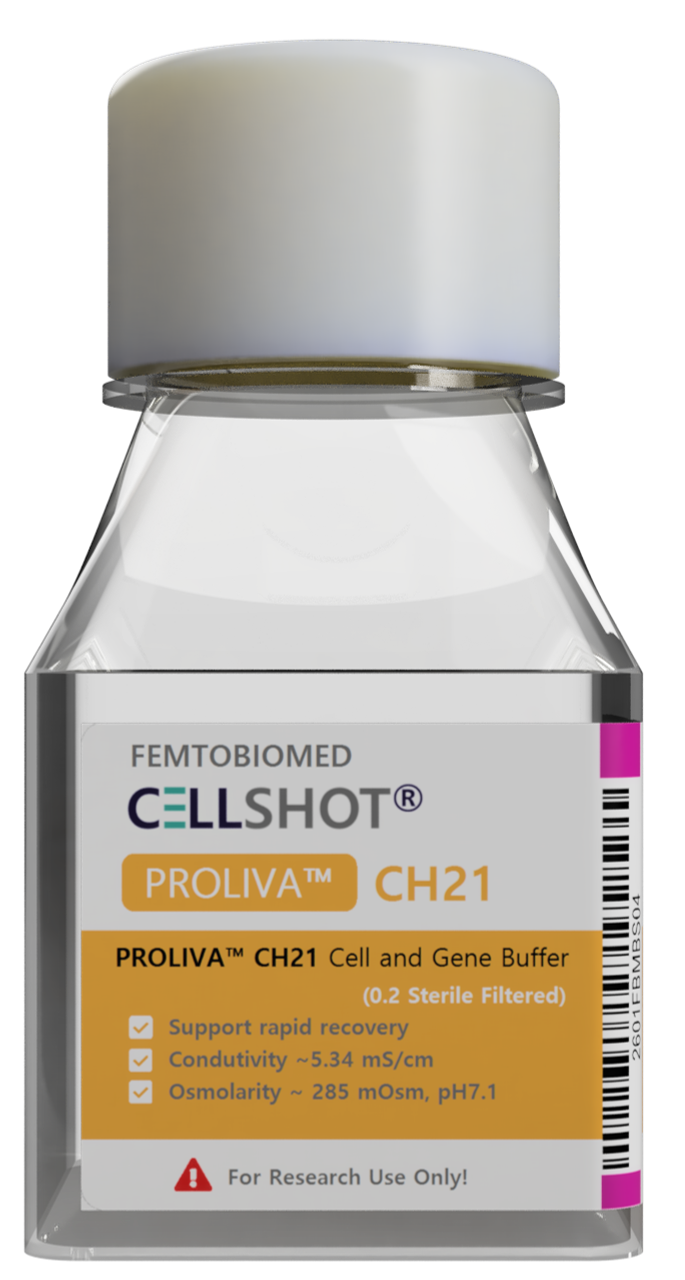 | 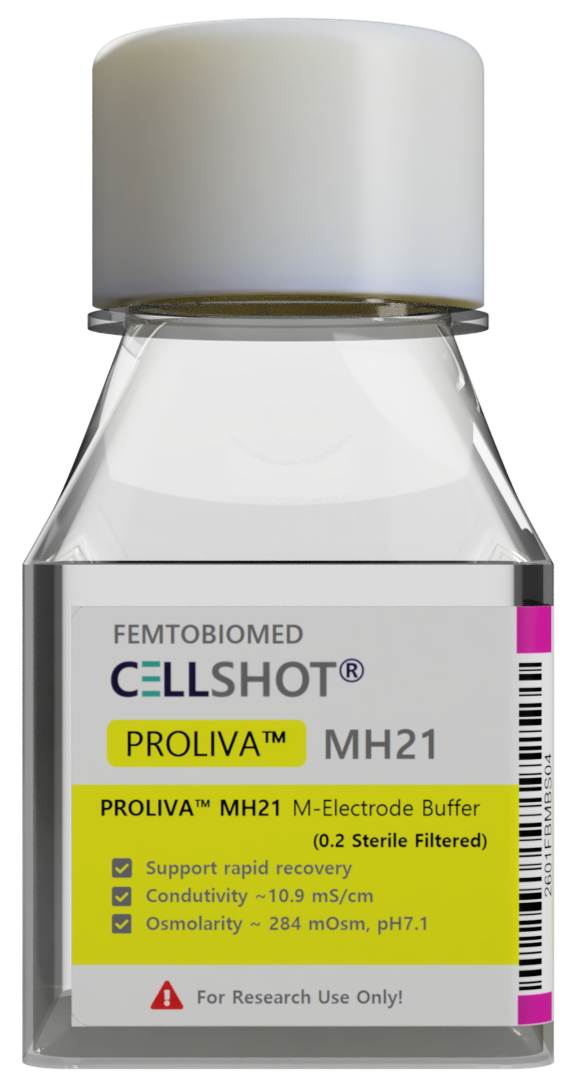 | 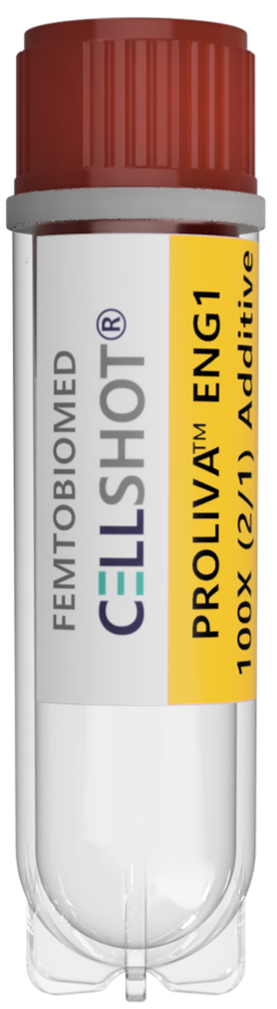 | 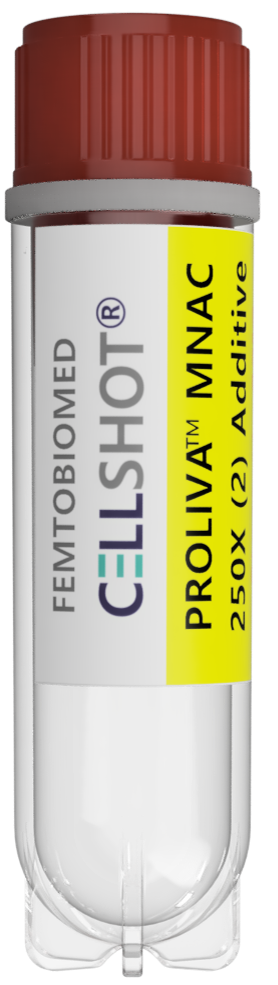 | 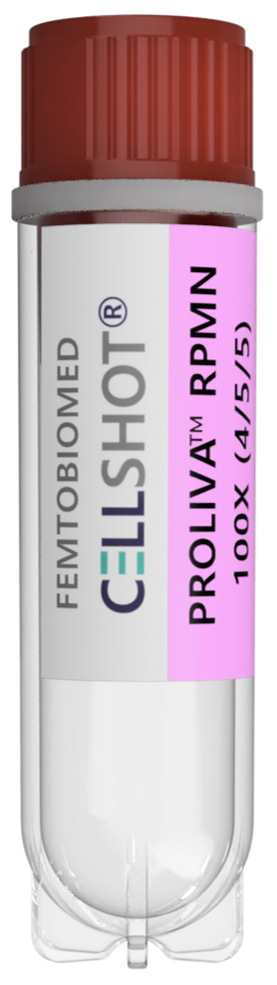 | 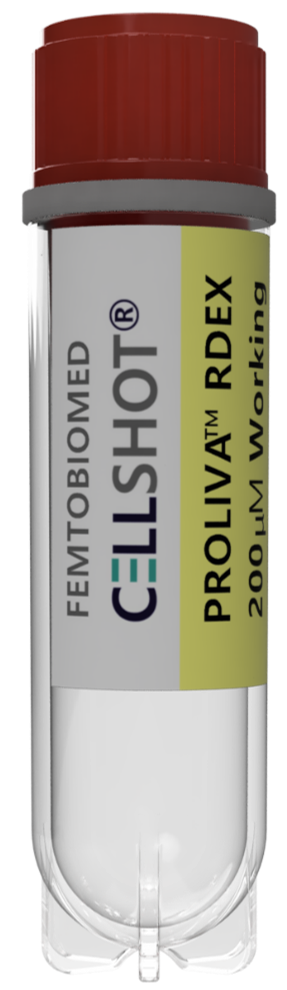 |
Biochemical Protection Aligned with Physical Control
Proliva™ is tightly integrated with the four core control dimensions of ND-FFT:
- Electrical Control
Maintains membrane stability under focused electric fields
- Thermal Control
Supports mitochondrial integrity under controlled electroporation
- Flow Control
Enables consistent biochemical exposure under continuous flow
- Buffer Control
Provides electrochemical defense at each process stage
This integration enables:
- ● High post-electroporation viability
- ● Preserved proliferation capacity
- ● Repeatable transfection workflows
- ● Manufacturing-scale robustness
04CellShot Cryoliva™
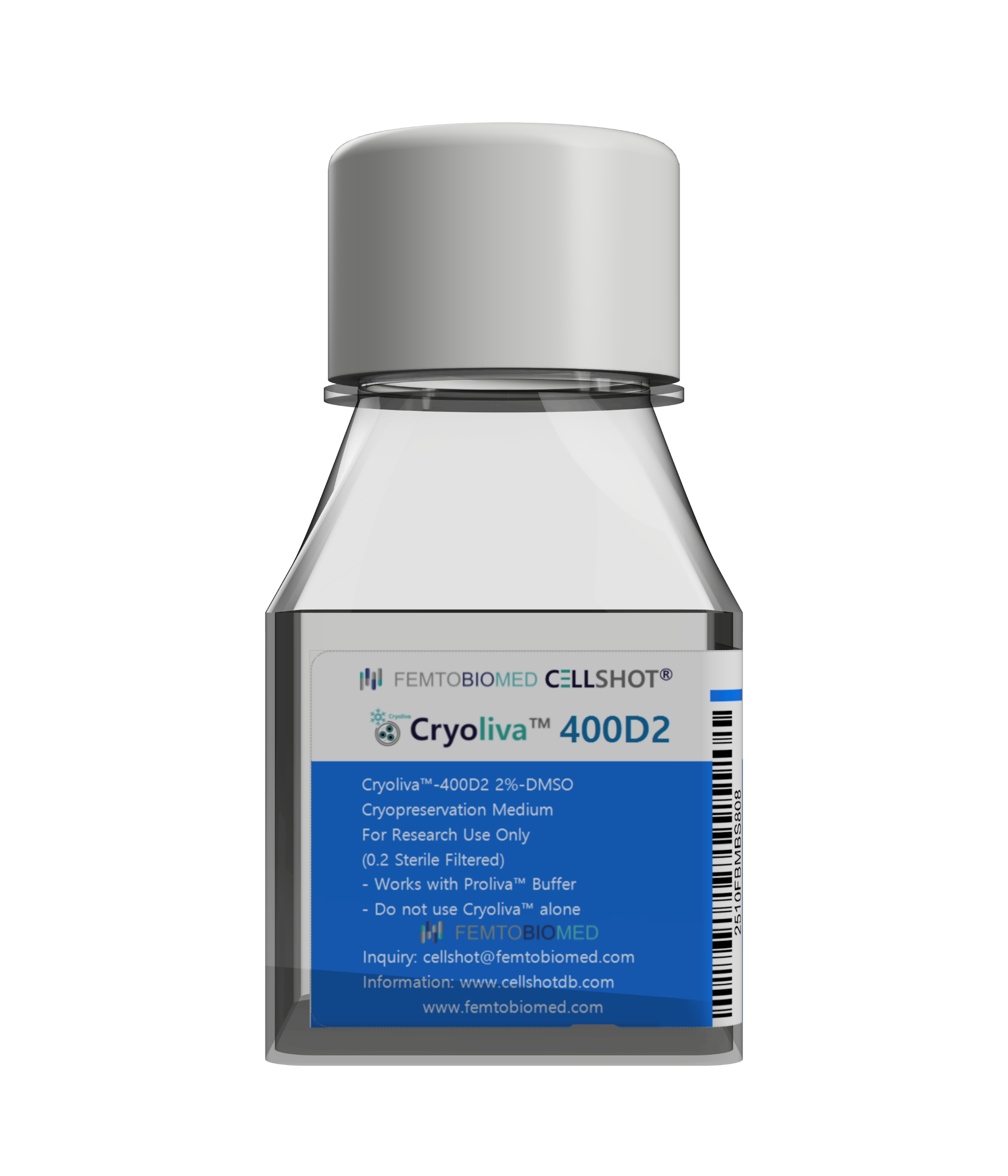
Cryoliva™: Preservation Is a Process, Not a Bottle
Cryoliva™ is currently under development as a process-optimized cryopreservation interface, designed specifically for cells conditioned by CellShot Proliva™ and ND-FFT electroporation.
Cryoliva™ is engineered to preserve the cellular state established during non-destructive gene delivery—minimizing toxicity, maintaining mitochondrial integrity, and enabling low-DMSO workflows.
Low-DMSO cryopreservation is not a formulation feature — it is a cell state. Cryoliva™ is designed to preserve that state.
Why Cryoliva™ Is Different
Conventional cryopreservation media often rely on high DMSO to compensate for damage. In contrast, CellShot Proliva™ enables diverse protection reagents loading during electroporation, stabilizing cells before freezing begins.
- ✓
Preserve Proliva-conditioned intracellular protection reagents
- ✓
Reduce reliance on cytotoxic cryoprotectants
- ✓
Maintain post-thaw proliferation and recovery
- ✓
Support seamless transition from recovery to freezing
As an option, commercial low-DMSO cryomedia can be directly applied following Proliva-based electroporation, already demonstrating high post-thaw recovery and workflow compatibility.
05CellShot Database(www.cellshotdb.com)
Digital Orchestration Layer for ND-FFT Manufacturing
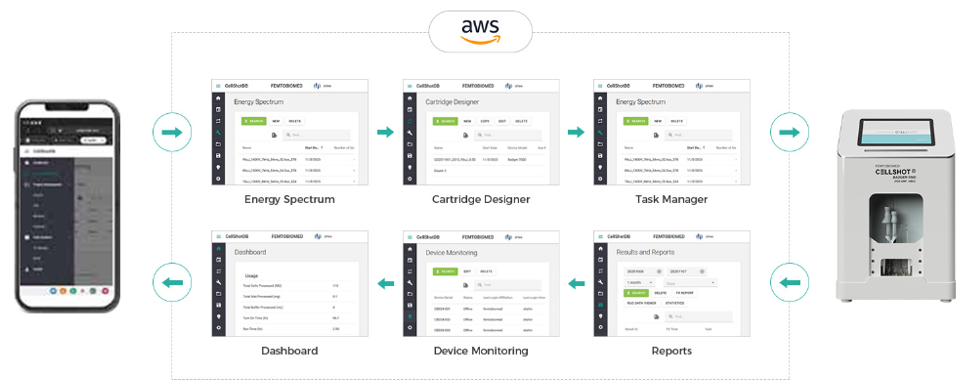
CellShot Database: The Digital Backbone of the CellShot Platform
CellShot Database is the cloud-based digital backbone of the CellShot® platform, designed to orchestrate, monitor, and validate every step of the ND-FFT non-viral gene delivery workflow.
Built on a secure AWS infrastructure, CellShot Database integrates electrical control, cartridge configuration, process execution, device monitoring, and data analytics into a single unified system—transforming electroporation from a manual operation into a fully traceable, protocol-driven manufacturing process.
End-to-End Workflow Integration
CellShot Database connects directly with each CellShot Controller to enable:
- Energy Spectrum design & protocol definition
- Cartridge configuration and compatibility management
- Automated task execution
- Real-time device monitoring
- Result analysis and reporting
All process parameters—including voltage, current, temperature, pressure, flow rate, and processing time—are continuously captured, analyzed, and archived.
Core Functional Modules
Energy Spectrum Designer: Design, store, and reuse validated electroporation energy profiles
Cartridge Designer: Configure cartridge formats, flow paths, and process compatibility
Task Manager: Execute protocol-driven operations with minimized operator variability
Device Monitoring: Real-time tracking of system status, alarms, and performance metrics
Dashboard & Reports: Batch-level summaries, trend analysis, and performance benchmarking
Manufacturing-Grade Data Integrity
- Full process traceability
- Audit-ready data logging
- Batch-to-batch reproducibility
- Multi-site network scalability
Advanced analytics modules further enable reagent/library management, automated FACS data integration, and custom dashboards for both R&D optimization and cGMP manufacturing control.
Why the Database Matters
ND-FFT is not a single device or buffer—it is a system-level manufacturing philosophy.
CellShot Database completes this system by ensuring that every physical process is digitally defined, executed, and verified.
Non-viral gene delivery becomes manufacturing-ready only when physics, chemistry, hardware, and data are unified.